
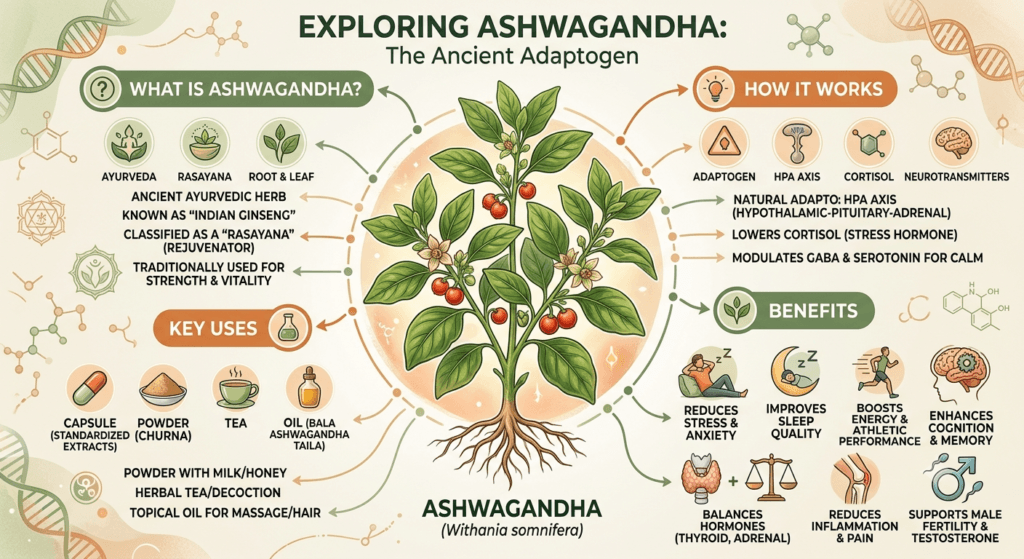
Ashwagandha is one of the most well-known herbs in Ayurveda and has been used traditionally for centuries as part of wellness and daily health routines. Today, it has become increasingly popular among people looking for natural ways to support energy, stress management, sleep, and overall well-being.
But what exactly is Ashwagandha, how does it work, and what benefits does it offer?
In this guide, we’ll explore what Ashwagandha is, its traditional uses, potential benefits, how it works, and how it can be included in a daily wellness routine.
What Is Ashwagandha?
Ashwagandha, scientifically known as Withania somnifera, is a small shrub traditionally used in Ayurvedic practices. It is sometimes referred to as Indian ginseng or winter cherry, although it is botanically different from true ginseng.
The roots of the plant are commonly used in Ayurvedic formulations. Different preparations may contain whole-root powder or extracts made from the plant.
Ashwagandha has traditionally been valued as a rejuvenating and adaptogenic herb. Adaptogens are plants that are traditionally used to help the body adapt to everyday physical and mental stress.
Today, Ashwagandha is available in several forms, including:
- Capsules and tablets
- Powder
- Herbal extracts
- Traditional Ayurvedic formulations
- Herbal blends
Why Is Ashwagandha So Popular?
Modern lifestyles can involve long working hours, irregular sleep schedules, busy routines, and everyday stress. Because of this, many people are exploring herbal ingredients that can complement a healthy lifestyle.
Ashwagandha has attracted attention because research has investigated its potential role in areas such as stress, sleep, mental well-being, exercise performance, and general vitality.
However, it is important to understand that Ashwagandha is not a replacement for a balanced diet, regular exercise, sufficient sleep, or professional medical care.
Potential Benefits of Ashwagandha
1. May Support Stress Management
One of the most researched uses of Ashwagandha is its potential role in managing everyday stress.
Some studies suggest that certain Ashwagandha preparations may help support the body’s response to stress and may be associated with lower perceived stress levels.
This is one reason Ashwagandha is often included in wellness routines focused on relaxation and emotional balance.
2. May Support Better Sleep
Quality sleep plays an important role in physical and mental well-being.
Traditionally, Ashwagandha has been used as part of routines designed to promote relaxation. Research has also explored whether Ashwagandha may support sleep quality, particularly in people experiencing sleep difficulties.
A consistent sleep schedule and healthy bedtime habits should remain the foundation of good sleep.
3. May Help Support Energy and Vitality
Feeling energetic throughout the day depends on several factors, including nutrition, sleep, physical activity, and stress levels.
Ashwagandha is traditionally used to support strength, stamina, and vitality. Some research has also examined its relationship with physical performance and recovery in people who exercise regularly.
Rather than thinking of Ashwagandha as an instant energy booster, it is better viewed as a herbal ingredient that may complement an overall healthy lifestyle.
4. May Support Physical Performance
Ashwagandha has been studied in relation to exercise performance, strength, and recovery.
Some research involving adults who participate in resistance training suggests that specific Ashwagandha extracts may support improvements in strength and muscle-related outcomes when combined with regular training.
Results can vary depending on the extract, dosage, duration, and individual factors.
5. May Support Focus and Mental Well-Being
Mental performance can be affected by stress, poor sleep, fatigue, and an unhealthy routine.
Researchers have investigated Ashwagandha for areas related to cognitive function, attention, and mental well-being. While early findings are interesting, more research is needed before making strong conclusions about its effects on cognitive performance.
6. Traditionally Used for Overall Wellness
Ayurveda has traditionally used Ashwagandha as a rasayana, or rejuvenating herb, as part of broader approaches to maintaining strength and well-being.
Its traditional use makes it particularly popular among people interested in incorporating herbal ingredients into their everyday wellness routines.
How Does Ashwagandha Work?
Ashwagandha contains naturally occurring compounds called withanolides, which are among the plant’s most studied constituents.
Scientists are researching how these compounds may interact with different biological pathways in the body.
One major area of interest is the body’s response to stress. The hypothalamic-pituitary-adrenal (HPA) axis plays an important role in regulating the stress response. Research suggests that Ashwagandha may influence stress-related pathways, although its exact mechanisms are still being investigated.
This is why Ashwagandha is often described as an adaptogenic herb.
Importantly, the effects of Ashwagandha can depend on the type of extract, concentration, dosage, duration of use, and individual characteristics.
Ashwagandha Root vs. Ashwagandha Extract
Not all Ashwagandha supplements are identical.
Some products use whole Ashwagandha root powder, while others use a concentrated root extract. Extracts may be standardized to a particular level of active compounds, such as withanolides.
When choosing an Ashwagandha supplement, it is useful to check:
- Which part of the plant is used
- Whether it contains root powder or an extract
- The amount per serving
- Standardization information, if provided
- Ingredient quality and testing
- Manufacturer details and labeling
A higher concentration does not automatically mean a product is better. The appropriate formulation depends on the intended use and individual needs.
How to Take Ashwagandha
There is no single dose that is appropriate for everyone because Ashwagandha products can differ significantly in formulation and concentration.
Follow the serving instructions provided on the product label. If you are taking medications or have an existing medical condition, it is sensible to speak with a qualified healthcare professional before using Ashwagandha.
For general wellness, consistency and a healthy lifestyle are more important than expecting immediate results from any herbal supplement.
Who May Consider Ashwagandha?
Adults interested in herbal wellness may consider Ashwagandha as part of a balanced routine, particularly those looking for nutritional support around:
- Everyday stress management
- Relaxation and sleep
- General vitality
- Exercise and physical performance
- Overall wellness
Individual responses can vary, and herbal supplements are not suitable for everyone.
Are There Any Side Effects?
Ashwagandha is generally well tolerated by many people when used appropriately, but it can cause side effects in some individuals.
Possible side effects may include:
- Stomach discomfort
- Nausea
- Diarrhea
- Drowsiness
More serious concerns can occur in certain situations. Rare cases of liver injury have been reported with Ashwagandha products.
People who are pregnant or breastfeeding, have thyroid or liver conditions, autoimmune disorders, or are taking medications should consult a healthcare professional before using Ashwagandha.
It is also important to choose products from reputable manufacturers and follow the recommended serving size.
Ashwagandha and a Healthy Lifestyle
Ashwagandha should not be viewed as a shortcut to better health.
A wellness routine works best when herbal supplements are combined with healthy habits such as:
- Eating a balanced diet
- Getting adequate sleep
- Staying physically active
- Managing daily stress
- Drinking enough water
- Limiting excessive alcohol and tobacco
- Maintaining regular healthcare checkups
Think of Ashwagandha as a potential addition to your routine rather than a replacement for healthy lifestyle choices.
Frequently Asked Questions About Ashwagandha
Is Ashwagandha good for daily use?
Some adults use Ashwagandha as part of a daily wellness routine. However, suitability depends on the individual’s health, medications, and the specific product being used. Follow the product directions and consult a healthcare professional if you have concerns.
How long does Ashwagandha take to work?
There is no universal timeline. Research studies have used different preparations and durations, and individual experiences can vary. It should not be expected to produce an immediate effect.
Can Ashwagandha help with stress?
Ashwagandha has been studied for its potential role in supporting stress management, and some research has reported improvements in perceived stress. However, it should not be considered a treatment for an anxiety or other mental health disorder.
Can Ashwagandha support sleep?
Research suggests that certain Ashwagandha preparations may support sleep quality in some people. Maintaining good sleep habits remains essential.
Is Ashwagandha only for men?
No. Ashwagandha is traditionally used by both men and women. However, individual suitability varies, and certain people should avoid it or seek professional advice before use.
Can Ashwagandha replace medicine?
No. Ashwagandha is a herbal supplement and should not be used as a substitute for prescribed medication or professional medical treatment.
Final Thoughts
Ashwagandha has a long history of traditional use and is now being studied by modern researchers for its potential effects on stress, sleep, physical performance, and overall well-being.
Its growing popularity comes from the combination of traditional Ayurvedic use and increasing scientific interest. At the same time, it is important to choose quality products, follow recommended serving instructions, and maintain realistic expectations.
If you are considering adding Ashwagandha to your routine, think of it as one part of a broader approach to wellness—alongside nutritious food, regular movement, quality sleep, and healthy stress-management habits.
Natural wellness works best when it becomes part of a consistent lifestyle, not a quick fix.